
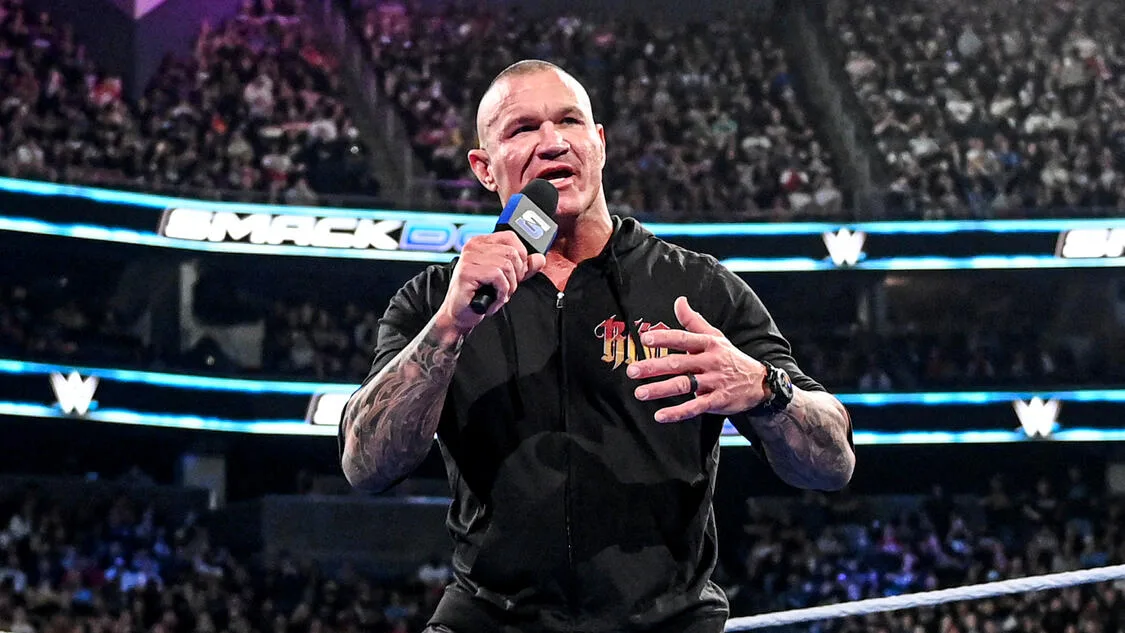
In a revealing and emotional conversation with Stephanie McMahon, former WWE Champion Randy Orton opened up about the severe mental health challenges he faced during his recent time away from the ring.
Following his spinal fusion surgery, the prospect of a forced retirement sent Orton into a dark place, triggering an identity crisis. “Here’s my identity. This is who I am. The one thing I know that I’m good at and I get respect for, and I can’t do it anymore. And for like, six months, I was under the impression that that was it. I got to like, a dark place.”
The veteran performer detailed the intense anxiety and panic attacks that followed. “I was having like, panic attacks,” Orton revealed. “And it was like, it started to become hard to fly. Started to become hard to stay in another bed, and I would be, like, up all night. Trying to go to bed at night and then not being able to lay down in bed, because my mind would start going, and then all of a sudden I’d get, like, hot, and I’d have to get out of bed walking around our yard, just like, taking deep breaths.”
Orton explained that he had to conceal these moments from his children and was eventually prescribed SSRIs to help him cope. After his condition improved, he was able to stop taking the medication six months ago. “I just, I didn’t know if I could do this job anymore,” he admitted. “I really feel like I’m in like, a good place. It’s kind of therapy to talk about it now.”
He also credited WWE’s Chief Content Officer, Triple H, for fostering a more supportive and “talent-friendly” environment that has been beneficial to his well-being. Orton contrasted the current atmosphere with the past, noting a significant shift in leadership philosophy.
“I was just talking to Hunter yesterday. He wasn’t at TV one week. Where is he? He was at Murphy’s softball game. It was the national championships,” Orton shared. “Just knowing that in the past that never would have happened, and knowing that now it’s okay, like, it just, it’s almost like, without even knowing it. He’s leading by example.”
This change, he explained, gives talent the confidence to prioritize their families without fear of professional consequences. “There’s no question in my mind that if I say, ‘Hunter, I’ve got this thing, and it’s very important to me and my family and my kids that I’m there,’ there’s no question in my mind that they’ll say ‘Done.’ Like that is huge. That’s everything,” Orton concluded.